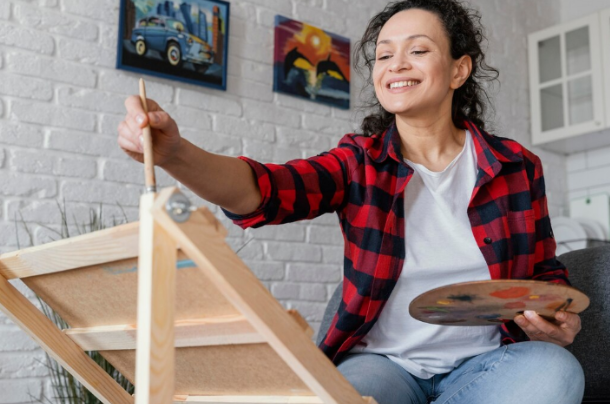


The act of painting is simplified when the brush glides effortlessly across the surface, and colors act in anticipation. Most people believe that, with brushes, skills will develop after years of training, but this belief, in the majority of cases, breeds fear instead of progress.
https://millo.co/5-expert-tips-to…t-by-numbers-artHowever, paint by numbers removes much of this stress by allowing the artist to focus solely on using the brush. Since the picture and colors are already planned, there is no need to worry about what to paint. Each numbered space becomes a simple chance to practice holding the brush, controlling pressure, and making clean strokes.
Over time, brush control develops from calm habits, steady practice, and an understanding of how paint responds to your hand. Anyone can learn this, regardless of age or background. This article shares five expert tips that help you master brush techniques in paint by numbers art.
1. Hold the Brush With Relaxed Confidence
The way one grips a paintbrush molds every stroke. The tense grip creates stiff lines, with shaky movement, while the relaxed one allows the brush to flow naturally across the surface. Experts always begin with comfort, particularly when working on guided projects like paint by numbers adults , where steady control makes a clear difference.
👋 Hey... Are you coming to our FREE Event: The 10X Your Freelancing Summit? Thousands are gathering virtually on August 25-27, 2026. Claim your FREE spot now.
Hold the brush lightly between your thumb and your fingers. Allow the handle to rest upon your hand, with no squeezing. Allow your wrist to remain loose and flexible. This position gives you better control and provides for smoother motion, helping your hand feel calm instead of strained.
Never hold the brush closer to the bristles. To achieve broader, smoother strokes, move your grip slightly higher on the handle. This position allows your arm to guide the movement of your strokes rather than just your fingers. For fine detail, you can move the hold closer to the tip for extra precision.
2. Control Paint Amount for Cleaner Results
The color control begins with knowing just how much paint to pick up onto the brush. Too much paint will create spills and diffuse, uneven edges, along with the loss of detail. On the other side, too little paint yields dry strokes and patchy coverage. Professionals spend a minute or so preparing the brush before touching it to the canvas.
Dip the very tip of your brush into paint. Softly tap or wipe the excess paint off the edge of your palette. It should look evenly coated but not too heavily. When it touches the canvas, it ought to spread smoothly without trickling or flooding the area.
Different brushes hold their paints differently. Flat brushes carry more paint and, therefore, are used for large areas. Round brushes hold less paint and are therefore ideal for detailed work. Small brushes require less paint compared to large ones. Knowing how each brush behaves will enable you to make informed choices while painting.
3. Use Smooth and Steady Brush Strokes
Smooth strokes result from being deliberate and in rhythm. Streaks occur from rushing. Those who paint well are deliberate in their strokes. They allow each stroke to work.
Start each stroke very lightly. Gently touch the surface, then move the brush over it. Lift the brush off the surface at the end of the stroke instead of stopping the brush.

Use the whole arm for long strokes instead of the wrist. This creates more straight lines and natural strokes by using the arm rather than the wrist. Using the wrist is better for tiny details.
Paint in one motion to get an even coverage. Painting back and forth can disturb the wet paint, causing it to streak and lose its smooth texture. Let it set before adding more coats of paint. This will result in a smooth finish with more depth.
Pay attention to the paint. Thick paint takes slower strokes. Thin paint has a good balance, and less pressure is applied. Consider the paint you are working with and adjust your speed accordingly. Many people find painting relaxing due to its slow, rhythmic nature.
4. Choose the Right Brush for Each Task
Each brush has its own uses. Choosing the right brush helps you to control detail, texture, and coverage. Professionals choose their brushes wisely. They do not make use of all brushes in all paintings.
Round brushes are ideal for detailing, edges, and small areas. Round brushes offer flexibility when painting. Flat brushes will work best on big areas and will give you clean edges. Angled brushes will help you paint corners easily. Fan brushes will help you achieve the soft effects of grass, clouds, or fur.
Switch brushes when needed, but avoid placing heavy demands on a single brush. This practice will not only be time-efficient but also yield better results. Regular cleaning of brushes ensures that they have soft, pliable bristles.
5. Practice Consistently Without Pressure
A skill increases with practice, but not with stressful or time-consuming practice. Professionals cultivate habits of practice that feel enjoyable and manageable. Short practice tasks are more likely to result in progress than longer tasks.
Carve out a small amount of time every day/week. Ten to twenty minutes is a great goal. Try to focus on one aspect in each session, like brush handling, the smoothness of strokes, and painting skills. Having goals in mind helps eliminate anxiety and boost confidence.
Practice basic shapes and lines. Circles, waves, and straight lines work on control and coordination. Practice them while painting, and do not try to achieve perfection. Practice them to achieve awareness and improvement.
Guided projects are great for practicing without worries. Paint by numbers for adults is a very instructive activity. You focus on strokes and paint action rather than making decisions about what to paint. It is an effective way of learning quickly, and you still enjoy the process.

Final Thought
Learning brushwork with paint is not an art that needs special skills or long study. It only needs patience, curiosity, and gentle practice.
When you know how to hold your brush with ease, control your paint, and work with intention, then painting will be your joy. Every stroke helps build confidence.

Keep the conversation going...
Over 10,000 of us are having daily conversations over in our free Facebook group and we'd love to see you there. Join us!