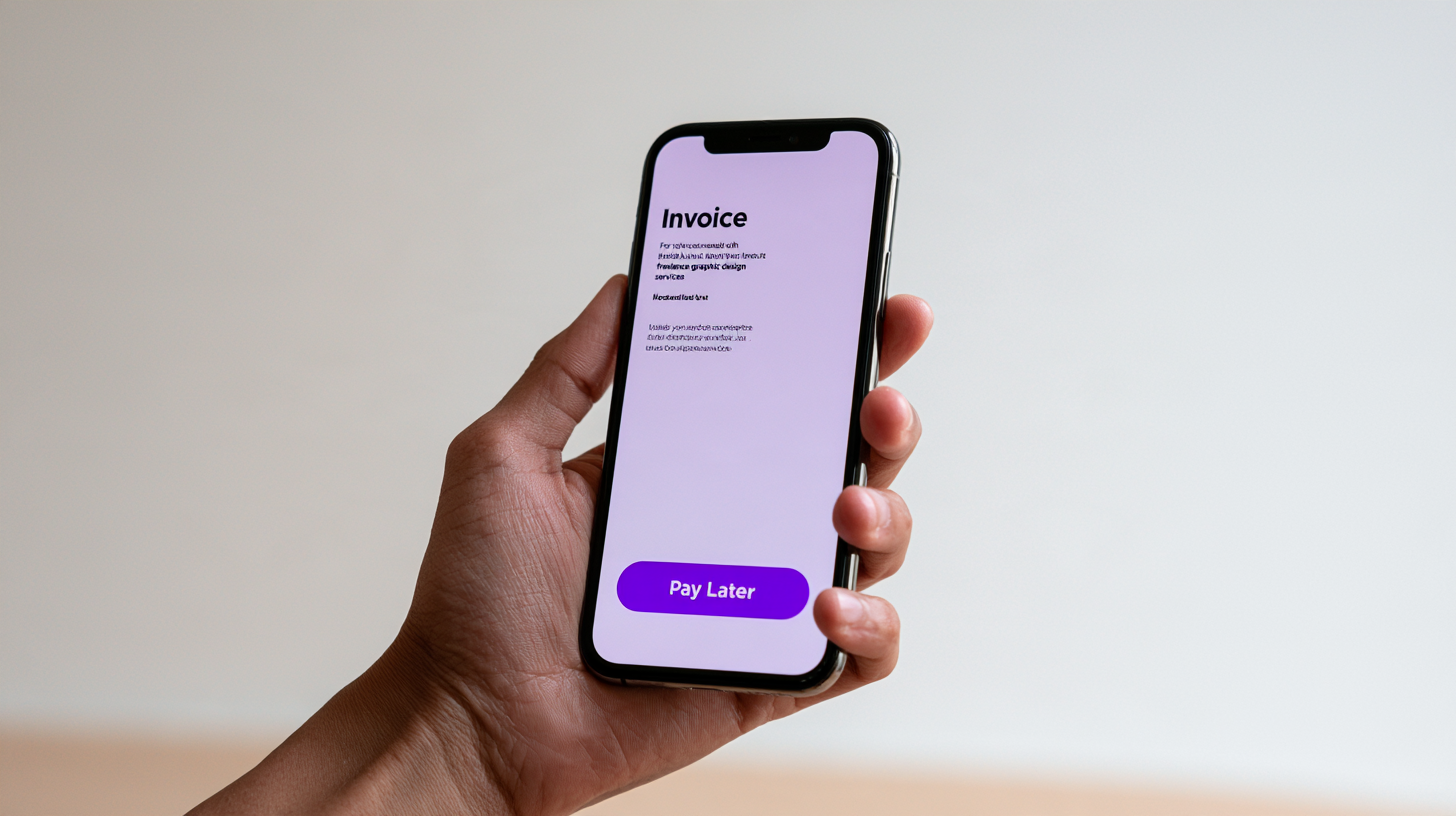

The $8,000 branding proposal didn’t get rejected because the client didn’t want the work. It got rejected (or more accurately, ghosted) because $8,000 all at once felt like a lot. That’s a different problem, and it has a different solution.
Freelancers and small agencies consistently undercharge, not because they lack confidence in their rates, but because they feel constrained by the ceiling set by what clients can comfortably write a check for. Structured payment terms shift that ceiling. When a $6,000 website becomes $1,500 over four months, the client’s psychological and cash-flow calculus changes completely.
This isn’t discounting. It’s removing friction. And it’s one of the most underused levers in a freelance or small agency business.
Why Productized Service Businesses Already Know This
If you’ve spent any time in the productized services world, you’ve seen this dynamic at work. Companies selling monthly design subscriptions, SEO retainers, or copywriting packages figured out years ago that recurring billing at $2,500/month lands better than a $30,000 annual contract, even though the math is identical. The payment structure is part of the selling.
👋 Hey... Are you coming to our FREE Event: The 10X Your Freelancing Summit? Thousands are gathering virtually on August 25-27, 2026. Claim your FREE spot now.
Freelancers who work on project-based engagements are slower to apply the same thinking. The default is still: 50% upfront, 50% on delivery. That structure works fine for small-ticket work.
For a $5,000–$15,000 engagement, it puts the client in a position of writing two large checks back-to-back, which creates hesitation even when the desire to hire is genuine.
The fix isn’t necessarily to change your pricing — it’s to change how the payment is structured.
Three Ways to Structure Client Payments
Milestone billing
Breaking a project into phases with a payment tied to each milestone is the most common approach and works well for defined scopes. A brand identity project might be structured as: discovery and strategy, concept development, final delivery — with a third of the fee due at each stage. This aligns payments with progress and reduces the client’s perceived risk.
Retainer or subscription model
Monthly retainers convert project revenue into predictable recurring income. They work best when the engagement involves ongoing work — content, maintenance, strategy, design support — rather than a one-time deliverable. For higher-ticket clients, the total annual value can be significantly larger than any project they’d have approved as a lump sum.
Third-party financing
This is the option most freelancers have never considered. Instead of managing installment billing yourself, you work with a financing platform that pays you upfront — in full — while the client pays the platform in monthly installments. You get paid immediately. The client gets flexibility. The administrative complexity of chasing payments disappears.
What Customer Financing Actually Means for a Service Business
Customer financing has historically been associated with retail furniture stores, electronics, and home improvement contractors. But the model has expanded. Service businesses, including creative and professional service providers, can now offer structured payment plans through third-party platforms that handle all the credit and collection mechanics.
If you want to understand how customer financing actually works for service businesses — the types of providers, how approval works, what you pay versus what the client pays, and when it makes sense — that’s worth understanding before you decide whether it fits your business model.
The short version: you apply with a financing provider, set up the integration, and when a client wants to spread payments, they apply directly through the provider. Most platforms use a soft credit check — one that doesn’t affect the client’s credit score — and give an instant decision. You receive full payment within a few business days. The client pays the platform over time.
For a $7,500 branding engagement, that might translate to the client paying $625/month for 12 months. For them, it’s manageable. For you, it’s paid in full before you’ve finished the discovery call.
Does It Work for B2B Freelancers? What Types of Services Fit?
The honest answer: it depends on who your clients are and how they pay.
Consumer-facing freelancers — those who work with small business owners, solo entrepreneurs, or individuals as clients rather than corporate procurement departments — are the best fit. These clients make purchase decisions the way consumers do: emotionally, practically, with personal cash flow in mind. A $9,000 website feels very different to a small restaurant owner than it does to an enterprise marketing team with a six-figure vendor budget.
Services that tend to fit well include brand identity and logo work, website design and development, copywriting and content strategy for small businesses, photography and video, and social media management packages. These are engagements where the client is typically an owner or operator making the decision themselves, the price is in a range that benefits from installments ($2,500–$15,000 is a common sweet spot), and the client has a genuine desire to move forward that’s blocked by cash flow rather than skepticism about the value.
Where it fits less well: enterprise clients with formal procurement processes, agencies billing other agencies, or very low-ticket work where the financing overhead isn’t worth the complexity.

How to Present Payment Options Without Undercutting Your Value
The biggest mistake freelancers make when introducing payment plans is apologizing for the price first. Leading with flexibility to soften a number you’re not confident in sends the wrong signal. The client notices.
The right framing: state the price clearly, then present the payment option as a convenience — not a rescue.
“This engagement is $8,500 total. Most clients prefer to structure it over three or four months — happy to set that up if it works better for your cash flow.” That’s it. You’re not asking for permission to charge what you charge. You’re offering a tool that makes the logistics easier.
If you’re using a third-party financing platform, the same principle applies. You present the option matter-of-factly: “We work with a financing platform — clients can apply in a couple of minutes and usually get an instant decision. Let’s them spread the cost over several months while I get paid upfront. Want me to send you the link?”
Confidence in the presentation matters as much as the structure of the offer itself.
The Mindset Shift: You’re Not Discounting, You’re Removing Friction
Freelancers who resist offering payment plans often do so because it feels like a concession — a signal that the price is negotiable or that the client can’t really afford it. That’s the wrong frame.
Consider what’s actually happening when a high-quality proposal gets ghosted. The client wanted the work. They may have believed in the value. What stopped them wasn’t the price — it was the lump sum—the total number felt risky, even if the monthly equivalent would have been completely comfortable.

Offering payment options doesn’t signal that you’re flexible on price. It signals that you understand how businesses actually manage cash flow, and that you’ve built the infrastructure to work with clients professionally at a higher tier.
The agencies and freelancers consistently landing $8,000–$15,000 projects aren’t doing it purely on portfolio strength. They’ve also made it operationally easy to say yes. Payment flexibility is part of that infrastructure — and it costs nothing to offer except the time it takes to set it up.
Keep the conversation going...
Over 10,000 of us are having daily conversations over in our free Facebook group and we'd love to see you there. Join us!