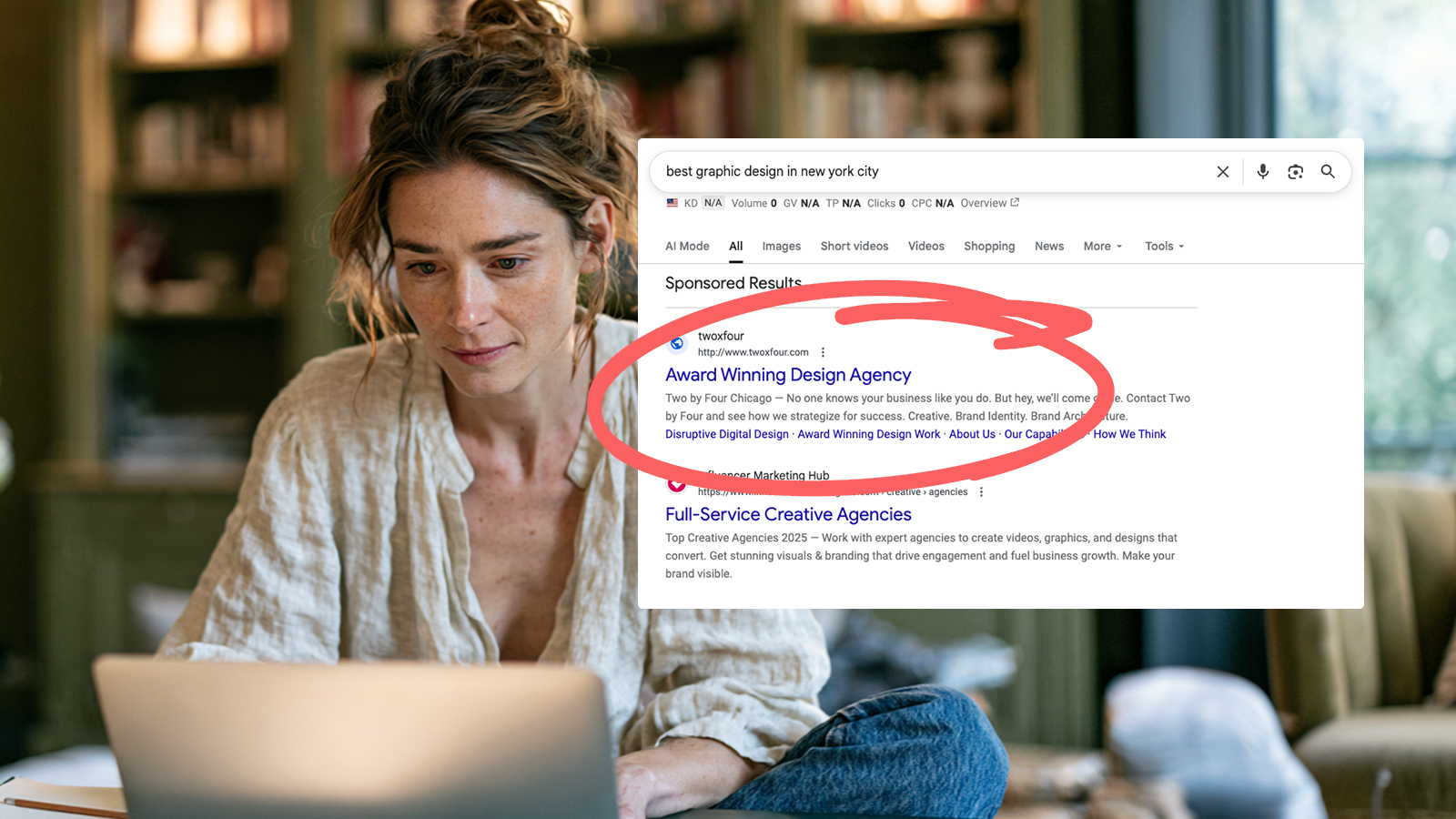


As the landscape around AEO and SEO changes, brands selling products or services are increasingly testing search engine advertising in the interim to tide them over as Google updates roll out.
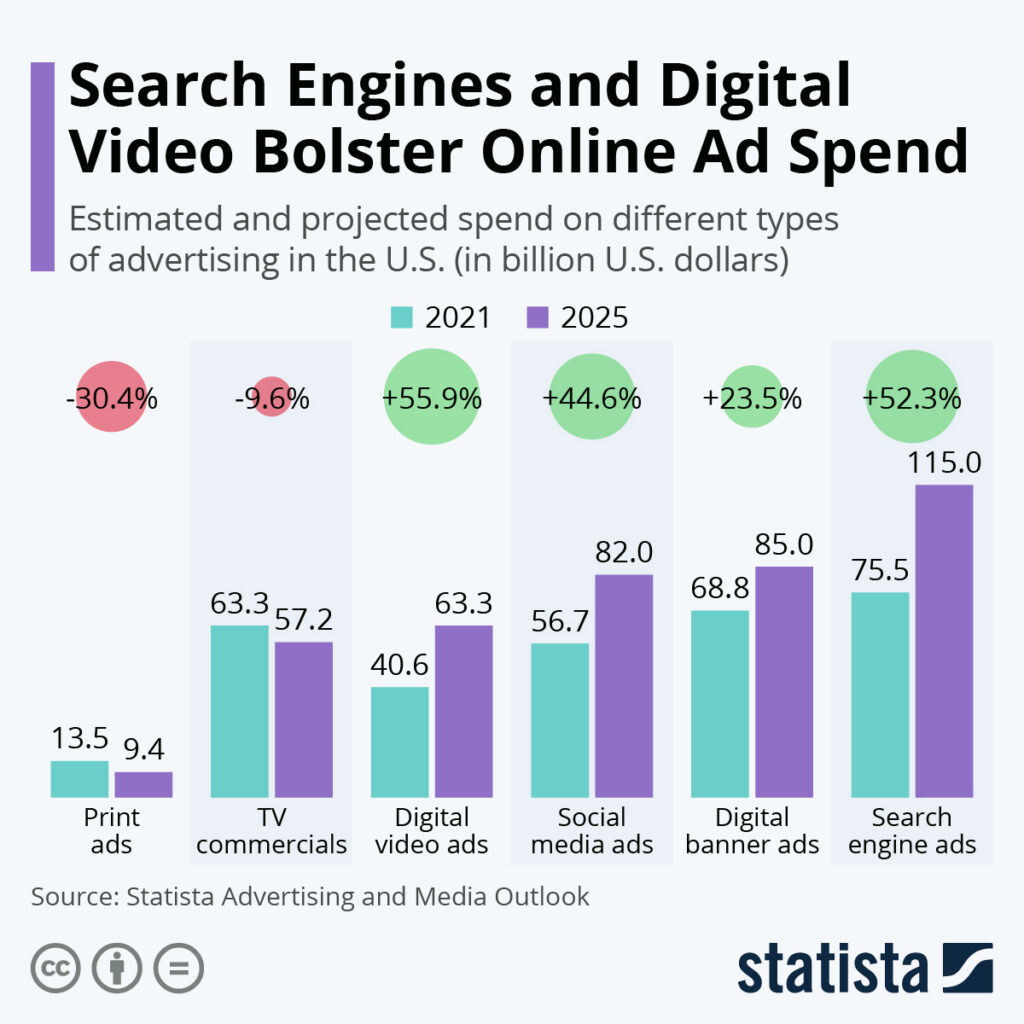
While alternatives like social media and SEO are still a huge part of every company’s marketing budget, search advertising remains the biggest investment among digital advertising.
What is search engine advertising?
SEA, or online search advertising, is a paid ad feature offered by major search engines like Google, Bing, and Yahoo.
👋 Hey... Are you coming to our FREE Event: The 10X Your Freelancing Summit? Thousands are gathering virtually on August 25-27, 2026. Claim your FREE spot now.
When getting started, look at which pages your competitors are focusing on, how much traffic they are getting, and how much it is costing them. I used Ahrefs to pull this data up for the law niche.
So, for example, Rosenbaum & Rosenbaum are focusing on the 30 pages that show up in my screenshot below, which is from Ahrefs data.
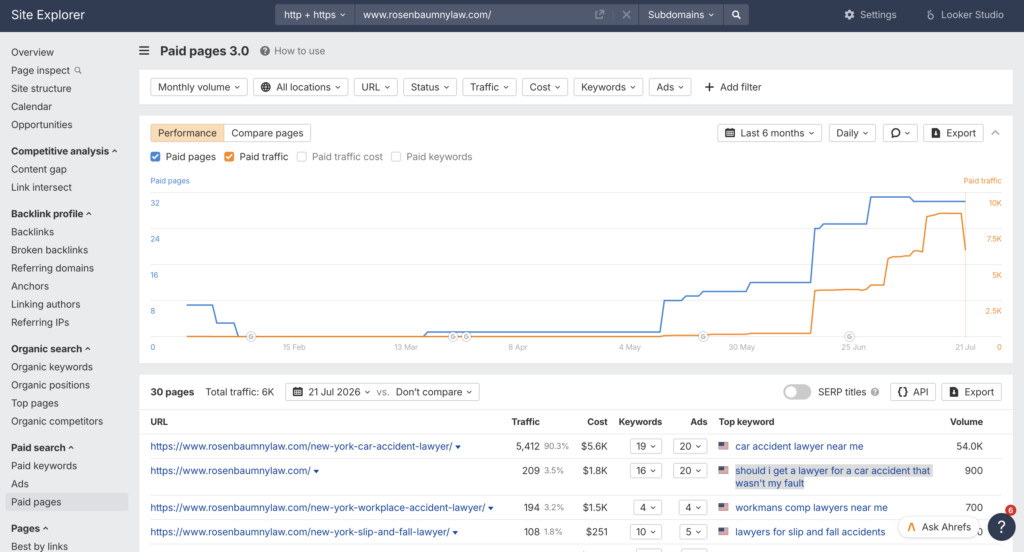
You can also search a prospective keyword in the search engine directly and see what shows up. The downside is that this data is not comprehensive.

When brands use SEA, search engines show their page to users specifically searching for the keyword they are targeting. This targeted advertising tends to be more effective than less targeted banner ads, which are more focused on the awareness stage of the funnel.
Benefits of SEA
It cannot be overstated how every digital marketing approach has its place in a well-delegated marketing budget. That being said, these are some of the benefits I am seeing with SEM:
- Targeted advertising: SEM targets people searching for keywords you are targeting, so if you target the keyword ‘personal injury claim worth’, you are more likely to reach someone interested in your specific services. This is what the law firm in the screenshot above is doing.
- Instant Visibility: Your firm, company, or brand might be building its online presence with SEO and AEO efforts. In the interim, search advertising provides instant visibility the moment you start an ad campaign.
- Segmentation: Platforms like Google Ads allow you to target with extreme precision. You can decide what audience sees your ad down to location, demographics like age and operating system, and even timing, which allows you to tailor when your ads run.
- Cost-effective: Before writing this, I saw an interior train card ad on the Boston subway, which is the banner ads you see above seats. These ads are not targeted and primarily serve to boost awareness. A quick search shows the average cost ranges between $4,500 and $15,000 per month. Larger markets like the New York subway start at around $64,000 for 1,000 units over four weeks.
Downsides of SEA
- Zero sustainability: Search advertising, unlike SEO/ AEO, is like renting. The moment you stop paying your dues, the visibility ends. SEO, on the other hand, invests in helping you build a personal channel with a steady stream of traffic.
- High costs: In competitive niches like law, SaaS, or finance, the costs rise since there are multiple competitors.
- Vulnerability:SEA’s model is a pay-per-click model, so it is naturally vulnerable to bot traffic and click fraud, which means you are still paying for clicks that don’t matter. There are also accidental clicks that come in when users are on smaller devices like their mobile devices.
What are search engine ads?
Search engine ads show up in search results and are marked as sponsored. They contain a headline, the URL of the page the person will reach when they click the link, and a description of the page.
This is an example of LawRank’s sponsored ad on Google:

All of the components need to be focused on when starting a campaign. You want your headline, URL, and description to work together to give users a reason to click through and visit the final page.
What are some alternatives to search engine advertising?
While SEA has its place in your marketing strategy, other strategies should be used alongside it to reach your audience at different stages and touchpoints.
Social media
Social media is split into two components: building your own audience by consistently posting and social media advertising.
It also builds community trust and brand equity, which has become even more important in the age of AI.

A platform like Sendible helps brands maintain their accounts across different platforms and schedule out posts in advance. It comes with features like content management, analytics, and team collaboration.

SEO and AEO
SEO has better long-term ROI than paid advertising does since it lives on even if you pause spending on it for a month.
Here are some of the main differences between the two:
- Longevity- SEO results compound with time as you build up your content, reputation, and maintain a brand online presence. This is true for both SEO and AEO. Advertising, on the other hand, is purely based on how much you invest in that month.
- Time to Results- It takes an average of 4 to 12 months for brands to start seeing results. SEA, on the other hand, gives companies immediate results.
- Cost Predictability- Initial costs depend on which agency you use, whether you have in-house, and your industry, to name a few major factors. As you grow your presence and your authority strengthens, maintenance costs tend to be lower.
How Much Does SEM Cost?
This varies across industries, brands, and marketing budgets. The cost-per-click (CPC) is highly dependent on your industry. According to a Google Ads report from Wordstream, the average cost per click across all industries in the US is $5.26.
However, we do see the average cost go up, with categories like legal services commanding a rate of 5.97%. Arts and entertainment is even higher at 13.10%
A good ballpark figure to keep in mind is that most agencies expect you to invest a minimum of $ 2,500-$ 3,000 per month to start seeing results. However, a competitive niche law or SaaS should realistically budget at least $ 5,000.
Search engine advertising major trends
With AI becoming a part of marketing, here are some of the trends we are seeing steal the spotlight:
Broad match and “AI max” campaigns
Platforms like Google are increasingly recommending broad match, automated bidding, and AI‑boosted campaigns to advertisers.

These features are embedded directly into campaigns, making automation the norm. The downside to this is that you cannot always see the exact queries or search terms your budget is consuming.
The need for more transparency is being increasingly advocated for amongst marketers.
‘Keyword-less’ search
The broad match feature means serving ads to users across queries that are similar to your exact phrase. Platforms use demographic data, user behavior, and history to show users ads.
This means AI technology by these platforms is displaying your ads to users beyond the list of queries you specifically provided.
The role of SEA in your marketing strategy
A good marketing strategy includes paid advertising within its budget while also maintaining a focus on other components like AEO/ SEO, social media, SMA, paid social, email marketing, and influencer marketing.
How you divide that budget comes down to your industry, resources, and your own analytics, which are becoming increasingly important as search engine data transparency data reduces.
Keep the conversation going...
Over 10,000 of us are having daily conversations over in our free Facebook group and we'd love to see you there. Join us!